2026-08-19 · Frank Sullivan
How Rochester Spring Thaws Lead to Basement Water Intrusion
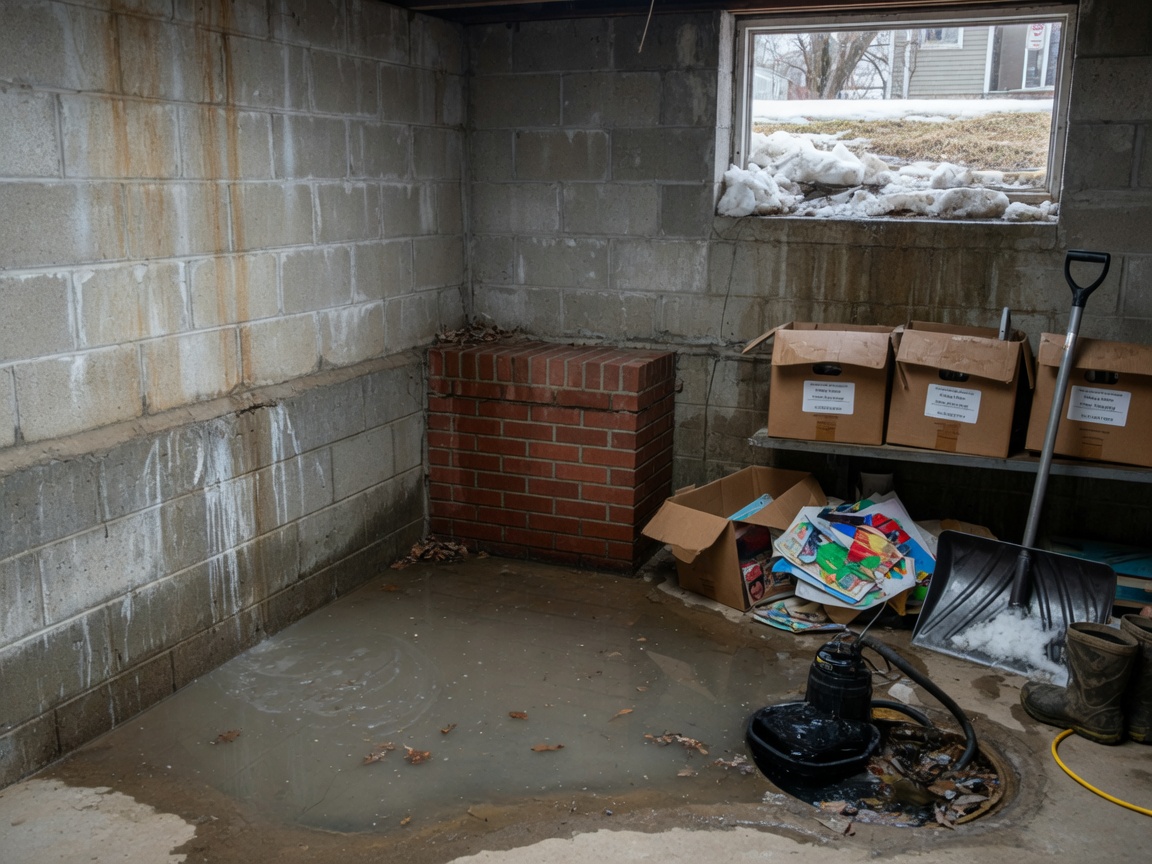
Rochester spring thaws trigger basement water intrusion when 30 to 60 inches of accumulated winter snow melts over two to four weeks while the ground remains frozen. The meltwater cannot soak in and instead flows toward foundations, especially in Monroe County where many homes sit on clay-heavy soils that hold moisture against basement walls.
Snow Load and Rapid Melt Cycles
Monroe County receives consistent heavy snowfall from lake-effect patterns off Lake Ontario. When temperatures climb above freezing in March and April, the melt rate can exceed one inch of water per day. Frozen subsoil channels this volume along driveways and yards directly to foundation perimeters in areas such as East Avenue and Park Avenue. Homes near the George Eastman Museum and Rochester Public Market often share the same shallow stone foundations that were never designed for this seasonal pressure. The result is water entering at floor-wall joints and through cracks that formed during prior freeze-thaw cycles.
Soil Saturation Around Local Neighborhoods
Clay and silt soils common throughout Rochester and nearby Brighton, Irondequoit, and Pittsford hold water against basement walls for days after the surface appears dry. In Charlotte, properties closer to the lake experience additional runoff from higher water tables during thaw periods. Once the top two feet of soil saturate, hydrostatic pressure builds on the exterior of foundations. Older homes in these neighborhoods lack modern waterproofing membranes, allowing water to migrate through mortar joints and porous block. This process repeats annually and explains why standing water appears even without heavy rain.
Entry Points in Typical Rochester Housing Stock
Many residences built before 1960 in Park Avenue, East Avenue, and Charlotte feature rubble stone or early concrete block foundations with no exterior drainage. Window wells collect meltwater when downspouts discharge nearby. Sump pits without battery backup fail when power is interrupted during spring storms. These conditions turn normal thaw volumes into interior flooding within 24 to 48 hours. Basement water extraction becomes necessary once water crosses the threshold because moisture quickly reaches framing and subfloors.
Practical Monitoring Steps During Thaw Season
Check window wells and grading around the foundation weekly once daytime highs exceed 40 degrees. Clear leaves and ice from gutters and downspout extensions so water moves at least six feet away from walls. Note any new cracks or efflorescence on interior walls, which signal rising groundwater. Residents in Swillburg and Culver-Winton report that early detection in these steps reduces the volume of water that reaches finished areas. When intrusion occurs, steps homeowners can take after discovering standing water outline safe initial actions before professional extraction begins.
Long-Term Patterns and Next Steps
Rochester's humid continental climate guarantees repeated thaw events each spring. Homes in Monroe County that experience intrusion once are likely to see it again without changes to drainage or grading. Tracking the exact timing of melt relative to temperature swings helps predict risk windows. For detailed cost information on extraction and drying after these events, review typical price ranges for flooded basement cleanup in Monroe County. Addressing the water source directly prevents repeated damage to concrete, framing, and subfloor materials common in local housing.