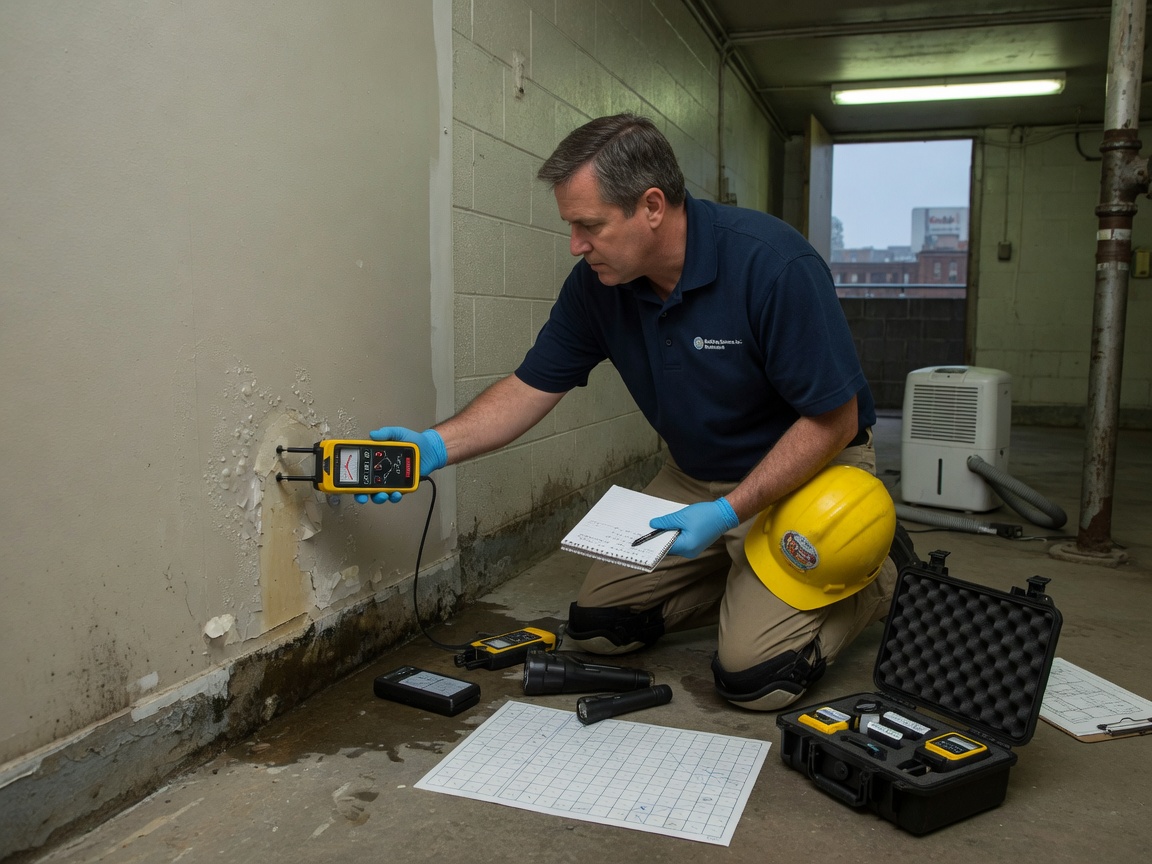
Rochester's humid continental climate brings heavy spring snow melt and freeze-thaw cycles that push water through the porous stone and brick foundations common in homes built before 1950 on Park Avenue and East Avenue. Moisture detection here requires checking both visible surfaces and hidden cavities because water often travels laterally along clay-heavy Monroe County soils before surfacing near the George Eastman Museum district. Technicians map readings room by room, noting how older lath-and-plaster walls retain moisture longer than modern drywall, which changes drying timelines and equipment placement.
High Falls and the Rochester Public Market sit on lower terrain that funnels runoff into nearby basements during rapid thaws, so detection must account for hydrostatic pressure against foundation walls in Irondequoit and Pittsford as well. Pin-type meters confirm surface readings while thermal cameras reveal cold spots behind finished walls without demolition. Skipping these steps frequently leaves pockets of moisture that reappear after the next heavy rain, especially in Charlotte homes with partial fieldstone foundations.
Local code requires addressing moisture sources before any finish work, and detection reports often guide whether sump pump upgrades or exterior grading fixes are needed first. In winter, ice dams on older slate roofs add another moisture path that travels down interior walls, so scans extend to the first floor when basement readings stay elevated.
Technician insight
In Rochester, the thing that catches most people out with Moisture detection is how quickly snow melt from the last big storm re-soaks older brick foundations along the Genesee near High Falls once the ground thaws.
East Avenue Brick Home After March Thaw
Water appeared along one wall after rapid snow melt. Thermal scans showed cold pockets behind plaster extending six feet up and into an adjacent closet. We mapped the full moisture path and placed targeted drying before any mold growth started.
Moisture Detection Services We Offer
✓Thermal Imaging Scans
Infrared scans identify temperature differentials behind walls and under floors in Rochester homes after winter thaws.
✓Pinless Moisture Meter Testing
Non-invasive meter readings across drywall, plaster, and concrete surfaces without leaving marks on finished basements.
✓Wall Cavity Inspections
Small access points allow direct moisture checks inside cavities common in pre-war Park Avenue and East Avenue houses.
✓Foundation Perimeter Checks
Targeted readings along stone and brick foundations track water movement from Monroe County clay soils.
✓Post-Snowmelt Assessment
Seasonal scans after heavy Rochester winters locate residual moisture before it leads to secondary damage.
Moisture Detection Cost in Rochester, NY
| Service | Typical Range | What Affects It |
|---|---|---|
| Single-room scan | $150–$250 | Small Charlotte or Park Avenue basements with clear access |
| Full basement scan | $300–$450 | East Avenue homes with multiple finished areas |
| Multi-level scan | $400–$600 | Includes first floor when water traveled upward |
| Post-extraction verification | $100–$175 | Return visit after drying equipment runs |
Ranges are typical for Rochester, NY and confirmed with an exact written quote before any work starts.
How it works
- 1
Site Walkthrough
Technician inspects visible water lines and asks about recent snow melt or storms affecting the specific Rochester neighborhood.
- 2
Tool Deployment
Thermal camera and moisture meters are used on all affected surfaces and adjacent rooms to map hidden damp areas.
- 3
Data Mapping
Readings are recorded on a floor plan noting high-moisture zones and probable entry points tied to local terrain.
- 4
Findings Review
Homeowner receives a written summary with recommended next steps for extraction or drying based on the readings.
Pricing
Most Rochester moisture detection jobs fall in the mid-hundreds depending on square footage and number of finished rooms.