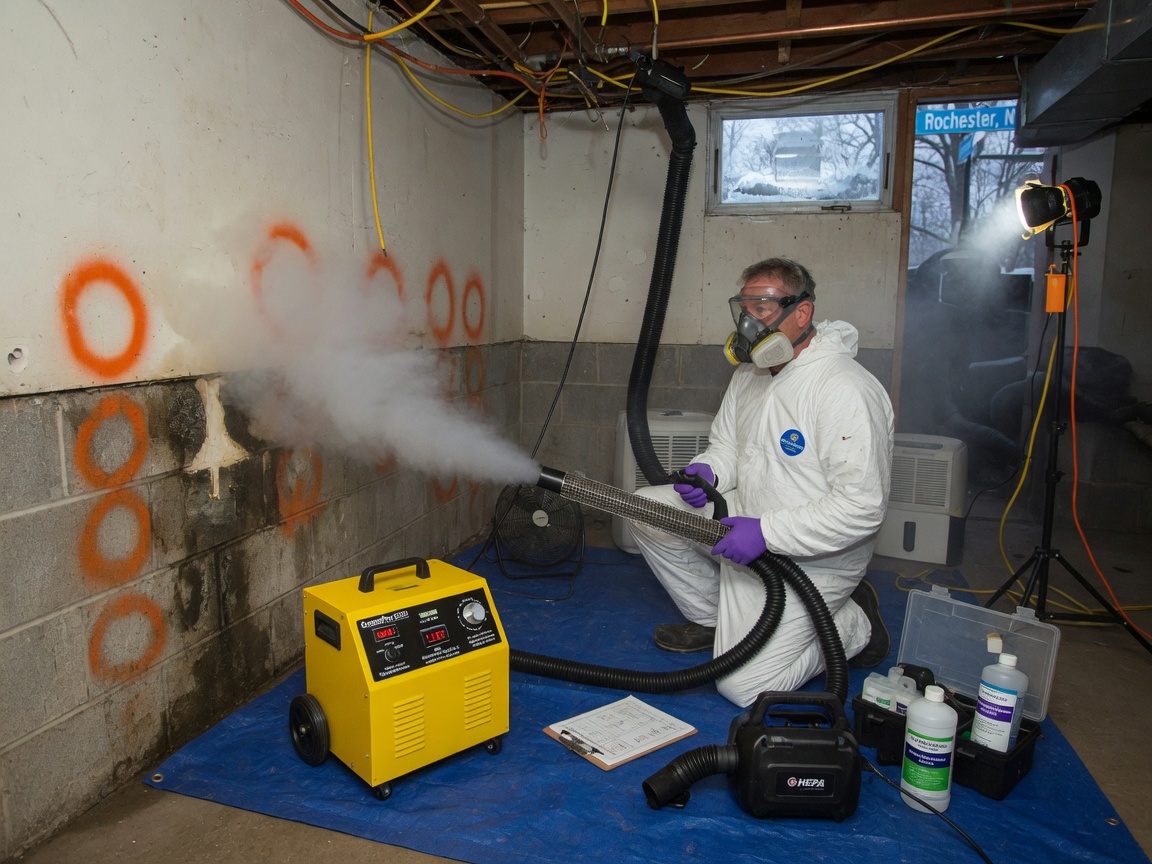
Rochester's humid continental climate brings heavy snow that melts into older stone foundations common in Park Avenue and East Avenue homes, trapping moisture that breeds persistent mold odors. Treatment requires antimicrobial agents applied to concrete and joists plus targeted ozone or hydroxyl generators because standard fans alone fail against odors locked in porous materials like lathe and plaster walls found in homes near the George Eastman Museum.
Winter freeze-thaw cycles in Monroe County push water through cracked foundations in Charlotte and Irondequoit, creating hidden pockets of mildew behind finished surfaces that release smells weeks after initial drying. Effective odor treatment includes removing saturated insulation, running commercial air scrubbers for 48 to 72 hours, and applying encapsulants rated for below-grade use to block recurring off-gassing.
Nearby Pittsford and Brighton properties often sit on clay-heavy soils that hold water longer, so odor jobs here demand extended dehumidification at 40 to 50 pints per day until moisture readings drop below 12 percent on wood. Skipping this step leaves residual smells that return every spring when humidity rises again.
Technician insight
In Rochester, the thing that catches most people out with odor treatment is how 1920s brick homes on Park Avenue and East Avenue hold water in their rubble-stone foundations through repeated winter freeze-thaw cycles, so the smell returns unless you remove the wet backfill material and encapsulate before the next snow melt.
Recurring Musty Smell in Charlotte Basement
A homeowner near High Falls reported returning basement odors after spring snow melt. We mapped moisture behind plaster walls, removed saturated insulation, applied antimicrobial fog, and ran ozone for two days. Air tests cleared and the smell did not return through the following winter.
Odor Treatment Services We Offer
✓Ozone Odor Neutralization
Circulates ozone through the basement to oxidize mold and mildew molecules embedded in older Rochester foundations and joists.
✓Antimicrobial Fogging
Applies EPA-registered fog to kill odor-causing bacteria on concrete, framing, and subfloors common in East Avenue homes.
✓Porous Material Removal
Extracts and disposes of saturated drywall, carpet, and insulation that continue releasing musty odors after flooding in Monroe County basements.
✓Encapsulation Coating
Seals concrete walls and floors with vapor-barrier coatings to prevent odor migration from soil moisture in Charlotte and Park Avenue properties.
✓Air Scrubber Rental
Deploys HEPA and carbon filtration units to capture airborne spores and VOCs during the drying phase in Rochester basements.
Odor Treatment Cost in Rochester, NY
| Service | Typical Range | What Affects It |
|---|---|---|
| Ozone Treatment Session | $250–$650 | Varies with square footage and number of rooms treated |
| Antimicrobial Fogging | $200–$500 | Higher in homes with finished basements requiring more surface area |
| Air Scrubber Rental | $150–$400 | Weekly rate; longer runs needed after winter snow-melt events |
| Encapsulation Application | $400–$900 | Depends on wall height and condition of older stone foundations |
Ranges are typical for Rochester, NY and confirmed with an exact written quote before any work starts.
How it works
- 1
Initial Moisture Mapping
Use meters to locate hidden wet zones in walls and floors typical of older Rochester housing stock.
- 2
Source Removal
Cut out and haul away odor-holding materials before any treatment begins.
- 3
Antimicrobial Application
Fog or spray surfaces with agents proven effective in cold-climate basements.
- 4
Verification Testing
Re-test air and surfaces until odor and moisture levels meet post-treatment standards.
Pricing
Pricing depends on basement size, extent of hidden damage, and duration of equipment use.