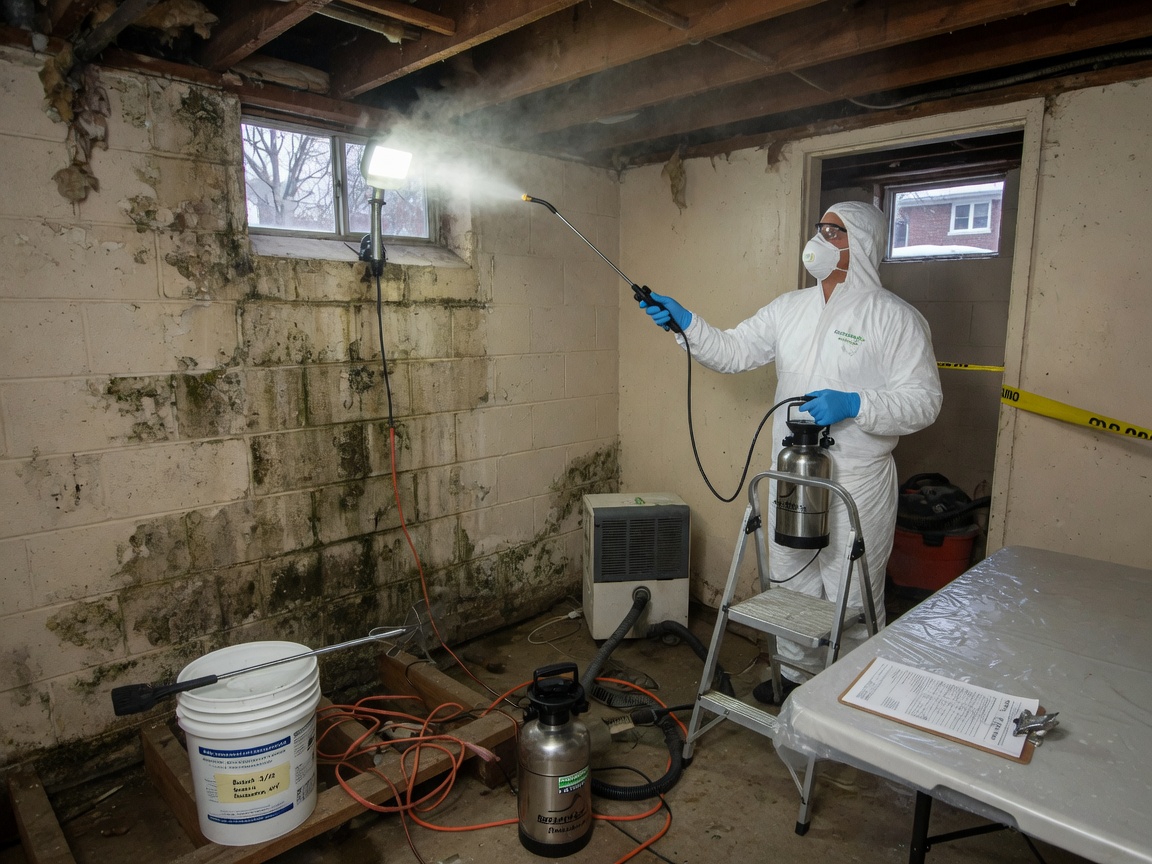
St. Paul Quarter sits along the east bank of the Genesee River with tight blocks of 19th-century row houses and converted warehouses between St. Paul Street and the Inner Loop. Many of these buildings have fieldstone or early poured foundations that sit close to the water table. When spring snowmelt or heavy rain hits, water finds its way through mortar joints and old sump pits faster than in newer subdivisions. Basement Recovery Experts runs trucks from 260 E Main St and reaches these addresses within minutes, bringing submersible pumps sized for the narrow alleys and limited driveway space typical here.
Winters in Monroe County drop heavy snow on St. Paul Quarter roofs and sidewalks. When temperatures swing above freezing, meltwater runs down foundation walls that lack modern waterproofing. The secondary keyword basement water extraction becomes critical on streets like North Clinton and Cumberland where parking is tight and equipment must be carried down exterior stairs. Our crews know which blocks have combined sewers that back up first and stage equipment accordingly before the next storm.
Homeowners between the Rochester Public Market and High Falls often call after a single downpour because the grade slopes toward the river. We extract standing water, then use air movers on the original plank subfloors that absorb moisture quickly. Same-day response keeps mold from forming in these dense, older structures where airflow between units is limited.
Around St. Paul Quarter
We regularly work near:
- 📍High Falls
- 📍Rochester Public Market
- 📍St. Paul Street
- 📍Genesee River Trail
- 📍Inner Loop
- 📍Cumberland Street
Flooded Basement Cleanup in St. Paul Quarter — Local Notes
- •Narrow one-way streets and limited curb cuts in St. Paul Quarter require smaller extraction rigs and extra hose length to reach rear basement entries.
- •Many foundations predate modern footings and sit directly on shale; water follows the rock layer and enters at the seam where floor meets wall.
- •Proximity to the Genesee River means rapid water table rise after snowmelt, so we often run continuous pumping for 48 hours rather than the shorter cycles used in Pittsford or Brighton.
- •Converted warehouse lofts have thick brick walls that hold cold; we add dehumidifiers rated for lower temperatures to finish drying before spring humidity arrives.