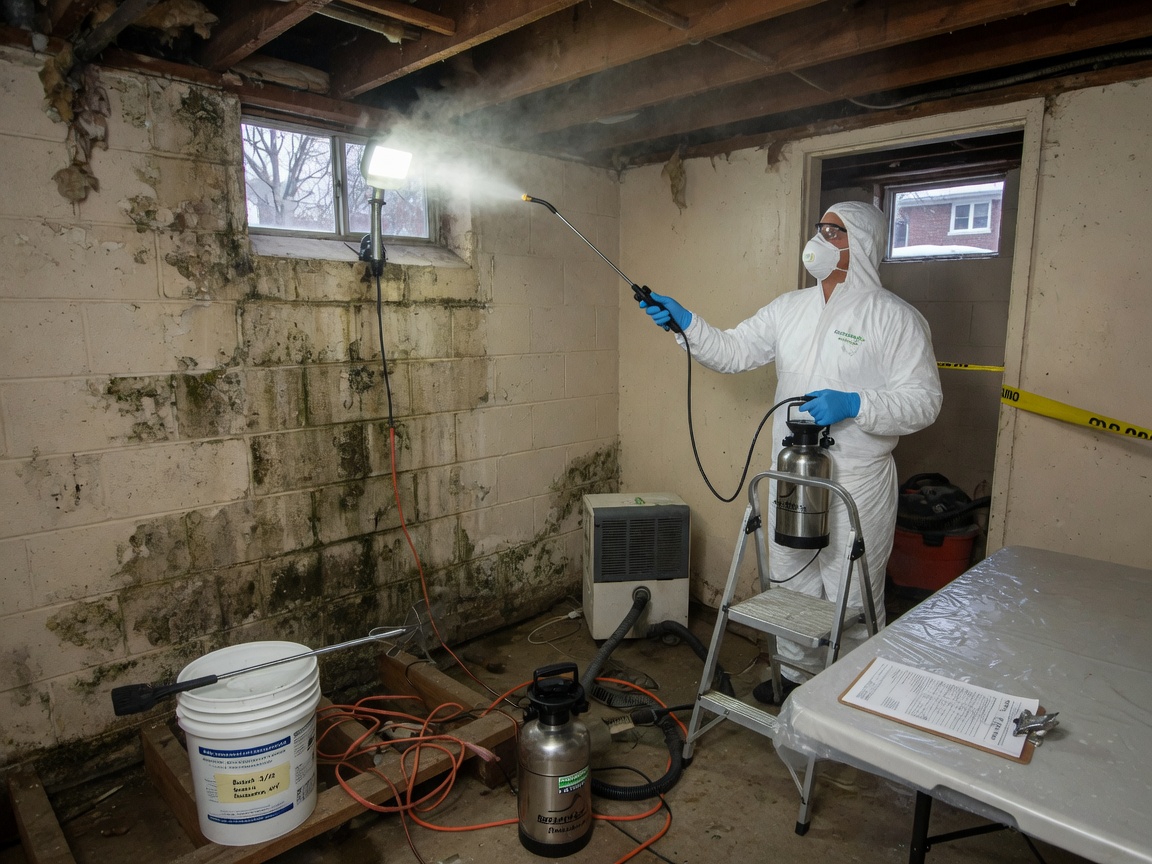
Rochester's humid continental climate brings heavy spring snow melt and occasional pipe bursts in older homes built before 1950 that line Park Avenue and East Avenue. These brick and stone foundations often retain moisture in Monroe County clay soils, creating conditions where mold colonies establish within 48 hours if antimicrobial steps are skipped. Treatment begins with EPA-registered agents applied to joists, sill plates and concrete walls after water extraction, followed by a penetrating sealer that leaves a residual barrier for months.
Technicians working from 260 E Main St focus on hidden pockets behind finished walls in Charlotte neighborhood cottages and Irondequoit ranches where airflow is poor. The process accounts for seasonal swings: winter jobs require extra drying time because cold air holds less moisture, while summer humidity demands faster application before spores activate. Homeowners in Brighton and Pittsford frequently overlook the George Eastman Museum area homes with limestone cellars that wick groundwater upward, making full surface coverage essential rather than spot treatment.
Edge cases include properties near High Falls where industrial-era foundations contain cracks that allow re-wetting, requiring repeated applications after initial drying. We avoid over-application that could affect indoor air quality and always ventilate during the process. This approach prevents the musty odors common in Rochester Public Market district basements that have seen repeated minor floods.
Technician insight
In Rochester, the thing that catches most people out with Antimicrobial/mold-prevention treatment is how the cold snowy winters keep older brick foundations in Park Avenue and Charlotte saturated longer than homeowners expect, letting mold hide behind baseboards until spring humidity spikes.
East Avenue Brick Home After Pipe Burst
A 1920s home on East Avenue experienced a winter pipe burst that soaked the finished basement. We found active mold behind drywall and on joists due to trapped moisture in the clay soil. Antimicrobial spray and coating were applied after extraction, followed by targeted drying. The basement stayed dry through the next thaw with no recurrence.
Antimicrobial/mold-prevention Treatment Services We Offer
✓Post-Flood Antimicrobial Spray Application
EPA-registered solution applied to all exposed surfaces after extraction to kill existing mold spores before they spread in Monroe County basements.
✓Mold-Inhibiting Coating for Joists
Penetrating sealer brushed onto floor joists and subfloors in older Park Avenue homes to create a long-term barrier against humidity from snowy winters.
✓Concrete Wall Antimicrobial Treatment
Specialized formula applied to poured and block walls in East Avenue and Charlotte properties where groundwater seepage is common after spring thaws.
✓Crawl Space Mold Prevention
Treatment and vapor barrier installation in low crawl spaces typical of Irondequoit and Pittsford homes to stop mold from rising into living areas.
✓HVAC Antimicrobial Fogging
Duct and register treatment to remove spores circulated through systems in Rochester homes after basement flooding events.
Antimicrobial/mold-prevention Treatment Cost in Rochester, NY
| Service | Typical Range | What Affects It |
|---|---|---|
| Standard basement antimicrobial treatment | $350–$650 | Average Rochester row home; increases with finished areas or multiple rooms |
| Joist and sill plate coating | $200–$400 | Common add-on in pre-1950 homes on Park Avenue and East Avenue |
| Crawl space treatment | $250–$500 | Depends on access and vapor barrier needs in Irondequoit properties |
Ranges are typical for Rochester, NY and confirmed with an exact written quote before any work starts.
How it works
- 1
Moisture Assessment
We measure remaining dampness in walls and floors using meters suited to Rochester's older masonry foundations.
- 2
Surface Preparation
Loose debris and standing residue are removed so antimicrobial agents reach all affected materials in Park Avenue and East Avenue basements.
- 3
Agent Application
EPA-registered antimicrobials are sprayed or brushed onto joists, walls and concrete, then allowed proper dwell time.
- 4
Protective Coating
A mold-inhibiting sealer is applied to high-risk surfaces before final drying and ventilation.
Pricing
Cost varies with basement size, extent of affected surfaces, and whether finished walls must be opened in older Monroe County homes.