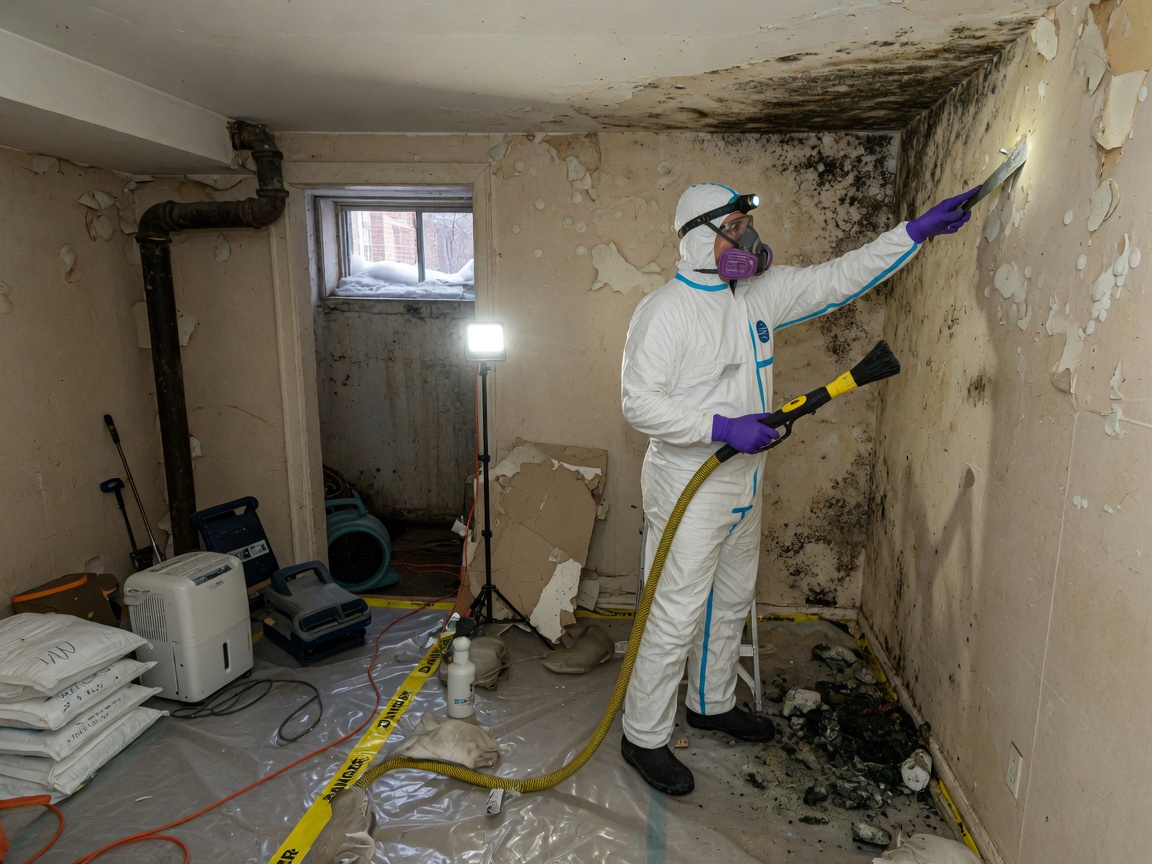
Rochester's humid continental climate brings heavy winter snow followed by spring thaws that push water into basements of pre-war homes along Park Avenue and East Avenue. These brick and stone structures often have fieldstone foundations and limited drainage, allowing moisture to wick into plaster and joist cavities where mold colonies establish quickly. A flooded basement cleanup crew must map hidden moisture with meters because surface drying alone leaves colonies behind lath and plaster that later release spores into living spaces.
Monroe County homes near High Falls and the Genesee River corridor face elevated water tables that complicate extraction after storms. Irondequoit and Pittsford properties with finished lower levels require careful containment to prevent cross-contamination into HVAC systems common in 1920s–1940s construction. Technicians remove saturated insulation, treat subflooring, and apply antimicrobial agents only after confirming moisture levels drop below 15 percent to avoid trapping spores in wall cavities.
Post-remediation verification includes air sampling and visual inspection of Charlotte neighborhood crawl spaces where clay soils retain water long after surface flooding recedes. Owners in Brighton frequently discover mold growth under carpet pads or behind baseboards installed during past renovations, requiring targeted removal rather than whole-room demolition. Proper disposal of contaminated materials follows local waste guidelines to prevent reintroduction into the property or neighboring homes.
Technician insight
In Rochester, the thing that catches most people out with mold remediation is hidden growth behind plaster in 1920s homes along East Avenue after winter snowmelt; the clay soils around Charlotte keep foundations damp for weeks, so skipping thorough drying always brings the problem back within a season.
Park Avenue Basement After Spring Thaw
A homeowner noticed musty odors in a finished basement two weeks after snowmelt. Inspection revealed mold behind baseboards and under carpet pad where fieldstone foundation had wicked water. Crew contained the space, removed saturated materials, dried the cavity, and cleared the air before reinstallation.
Mold Remediation Services We Offer
✓Basement Mold Removal
Complete removal of visible and hidden mold colonies from Rochester basement walls, floors, and joists after water intrusion events.
✓Black Mold Remediation
Specialized containment and disposal protocols for Stachybotrys in older East Avenue and Park Avenue homes with repeated moisture exposure.
✓Post-Flood Mold Cleanup
Extraction, drying, and antimicrobial treatment following basement flooding from snowmelt or heavy rain in Monroe County properties.
✓Crawl Space Mold Treatment
Inspection and remediation of mold in vented or sealed crawl spaces common under Charlotte and Irondequoit homes built on clay soils.
✓Mold Inspection and Testing
Moisture mapping and air sampling to locate hidden growth behind plaster in Rochester's pre-1950 housing stock.
Mold Remediation Cost in Rochester, NY
| Service | Typical Range | What Affects It |
|---|---|---|
| Initial Mold Inspection | $250–$450 | Higher in multi-level homes with limited access around Park Avenue |
| Small Area Remediation | $800–$1,600 | Covers under 100 sq ft of visible growth after basement flooding |
| Full Basement Remediation | $2,200–$4,800 | Includes containment, removal, and drying in typical Monroe County homes |
| Post-Remediation Clearance Testing | $300–$550 | Air sampling required for insurance documentation |
Ranges are typical for Rochester, NY and confirmed with an exact written quote before any work starts.
How it works
- 1
Site Assessment
Technicians inspect affected areas in the Rochester home, measure moisture levels, and identify hidden growth locations typical in older foundations.
- 2
Containment Setup
Negative air machines and plastic barriers isolate the work zone to prevent spore migration into occupied spaces or HVAC systems.
- 3
Removal and Cleaning
Saturated materials are removed, surfaces are cleaned with EPA-registered agents, and debris is bagged for proper disposal.
- 4
Drying and Verification
Industrial dehumidifiers and air movers reduce moisture below 15 percent, followed by clearance testing before barriers come down.
Pricing
Costs depend on square footage affected, depth of hidden growth, and whether finished surfaces must be opened in older Rochester homes.